

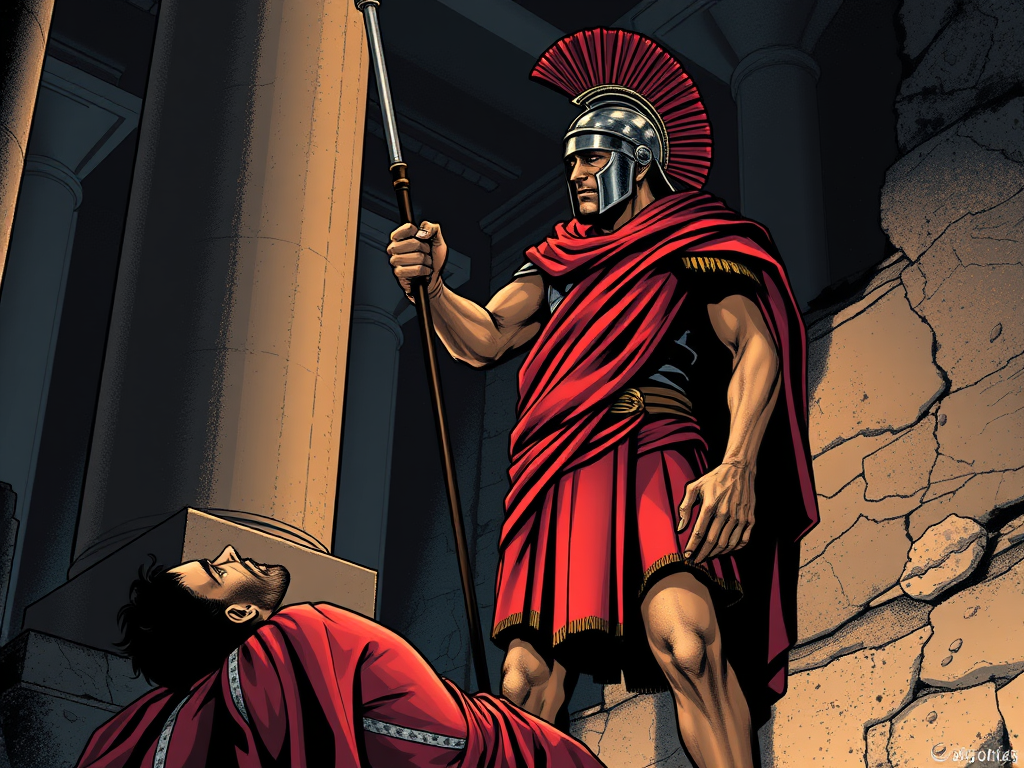
Romans 13, particularly the first seven verses, has often been a point of tension when discussing government, authority, and submission. It reads:
Romans 13:1-2 (NIV)
“Let everyone be subject to the governing authorities, for there is no authority except that which God has established. The authorities that exist have been established by God. Consequently, whoever rebels against the authority is rebelling against what God has instituted, and those who do so will bring judgment on themselves.”
This passage has been used historically to justify obedience to governments, even oppressive ones, but that interpretation is incomplete without considering:
- The Historical Context
- The Larger Biblical Message
- How It Applies to Jesus’ Authority and Christian Ethics
1. The Historical Context
Paul wrote this letter during the reign of Emperor Nero (AD 54–68), a ruler who would later become infamous for his persecution of Christians. However, at the time of writing, Rome was still allowing a measure of religious tolerance. Paul was likely addressing an issue specific to the early Christian movement in Rome, where Jewish and Gentile believers were navigating tensions with Roman rule.
- Many Jews expected the Messiah to overthrow Rome, and some Jewish groups (like the Zealots) actively resisted Roman control.
- Paul was not advocating for blind obedience, but rather a non-revolutionary stance so that Christians would not be seen as political rebels.
- His emphasis is on peace and witness—if Christians were seen as disorderly troublemakers, it could hinder their ability to share the gospel.
Key Takeaway:
Paul is saying, “Don’t seek revolution. Live peaceably. Let your faith be your testimony.” He wasn’t necessarily endorsing Rome’s moral character.
2. The Larger Biblical Message
If Romans 13 was meant to be a universal rule of obedience to governments, it would contradict many biblical examples where resisting evil authorities was righteous:
- The Hebrew Midwives (Exodus 1:17) refused Pharaoh’s order to kill Israelite babies.
- Daniel (Daniel 6) defied King Darius’ decree and continued praying to God.
- Shadrach, Meshach, and Abednego (Daniel 3:16-18) refused to bow to Nebuchadnezzar’s golden statue.
- Peter and John (Acts 4:19-20) boldly declared, “We must obey God rather than human beings.”
- Jesus Himself was crucified by an unjust government, never calling for armed rebellion but also not yielding to corrupt authority.
Key Takeaway:
God may allow governments to exist, but not all governments act in accordance with His will. Obedience to earthly rulers is conditional on whether it aligns with God’s righteousness.
3. How It Applies to Jesus’ Authority and Christian Ethics
Some scholars suggest that Paul isn’t primarily talking about earthly governments at all, but about divine order. In the Roman world, authority was understood as divinely given, even when misused. Paul may be drawing a parallel:
- Earthly rulers may govern, but ultimate authority belongs to Christ.
- Christians are citizens of God’s kingdom first and must live in ways that reflect His rule.
- The real revolution is one of the heart—living under Jesus’ authority, not political rebellion.
When read in light of Romans 12 (which comes right before this passage), a different picture emerges:
“Do not repay anyone evil for evil… If it is possible, as far as it depends on you, live at peace with everyone. Do not take revenge, my dear friends, but leave room for God’s wrath.” (Romans 12:17-19)
Paul is likely saying: Instead of trying to overthrow unjust rulers yourselves, trust in God’s justice. Live honorably, so that your witness brings people to Christ. This aligns with Jesus’ teaching that His kingdom is not of this world (John 18:36).
Modern Application: What About Corrupt Governments?
Many struggle with this passage when faced with oppressive regimes, corrupt leaders, or unjust laws. Does Romans 13 mean Christians must accept all government actions?
No. Christian faithfulness sometimes requires defiance of injustice. But that defiance must be rooted in God’s justice and love, not violence or power struggles.
- When laws promote justice and peace, obey them as part of the Christian witness.
- When laws contradict God’s righteousness, disobedience is necessary (e.g., civil rights movements, resisting oppression).
- Our ultimate allegiance is to Christ. Governments are temporary, but God’s kingdom is eternal.
This means:
- Christians must be discerning. Some authority is given by God, but not all actions of rulers are righteous.
- There is a difference between order and oppression. Paul wasn’t calling Christians to endorse evil but to live wisely under existing conditions.
- Governments are accountable to God, too. Rulers who abuse power will face judgment (Psalm 2, Revelation 19).
Conclusion: Not About Blind Subjugation, But About Kingdom Allegiance
Romans 13 isn’t an absolute command to obey all governments. It’s a call to:
- Live in peace when possible.
- Be wise about how we engage with authority.
- Recognize that ultimate authority belongs to Christ.
- Resist injustice when necessary, but in a way that reflects Christ’s character.
This passage is less about political submission and more about how believers should live as citizens of heaven while existing in earthly systems. Instead of revolution, Paul points to a deeper transformation: letting Jesus reign in our lives, our choices, and our witness to the world.
Sources/Further Reading
Certainly, here are some sources that provide further insight into the interpretation of Romans 13 in the context of modern application and the issue of authority:
- Historical Context of Romans 13 and Nero’s Reign:
- Paul’s letter to the Romans was written during the reign of Emperor Nero, who is traditionally known for his tyrannical rule and persecution of Christians. This context is crucial for understanding Paul’s directives in Romans 13.
- Biblical Instances of Resisting Unjust Authority:
- Scripture provides numerous examples where individuals defied unjust commands:
- The Hebrew midwives disobeyed Pharaoh’s order to kill male Hebrew infants.
- Shadrach, Meshach, and Abednego refused to worship Nebuchadnezzar’s golden image.
- Daniel continued to pray to God despite King Darius’s decree.
- The apostles Peter and John proclaimed, “We must obey God rather than men,” when ordered to stop teaching in Jesus’ name.
- Scripture provides numerous examples where individuals defied unjust commands:
- Theological Perspectives on Submission to Authority:
- Theologians like Thomas Aquinas have discussed the conditions under which authority is established and exercised, suggesting that obedience to authority is contingent upon its alignment with divine will and justice.
- Modern Interpretations and Applications:
- Discussions continue on how Romans 13 should be applied today, especially concerning unjust governments. Some argue that while Christians are called to respect governmental structures, there is also a biblical mandate to resist laws and authorities that are inherently unjust or immoral.

Authored by
Pastor Alex
Consider donating to help us continue this ministry in sharing the Gospel through worship, the Word, and inclusion!
Leave a Reply