
Hello people of the internet. Pastor Alex here! I am coming at you with some information I feel incredibly dumb for not researching before. But first, let me tell you a story.
I was recently gifted a book by an individual connected to our online ministry. The book is titled Raising Hell by Julie Ferwerda. Here is the synopsis:
What’s all the fuss lately about the traditional Christian doctrine of hell? Seems like every week there’s a new book, article, or blog debating this long-held view, with a growing number of mainstream believers and even Bible scholars beginning to question the status quo. Why are so many people now challenging this core belief with questions, such as: Why isn’t hell mentioned in the Old Testament? How is the gospel “good news for all people” if most people never benefit from it? Is being punished forever for sins committed in a short lifetime really justice? Does everybody really get the same, fair chance to believe in Jesus before they die? Do parents really love their wayward children more than God? Does God ask us to forgive our enemies when He’s not willing to do the same?
Learn the surprising truth about the origins of the hell doctrine and how, upon closer inspection, it’s not even taught in the Greek or Hebrew scriptures. God’s love is much bigger and more powerful than you ever imagined.
Dare to question. It could be the best decision of your life.
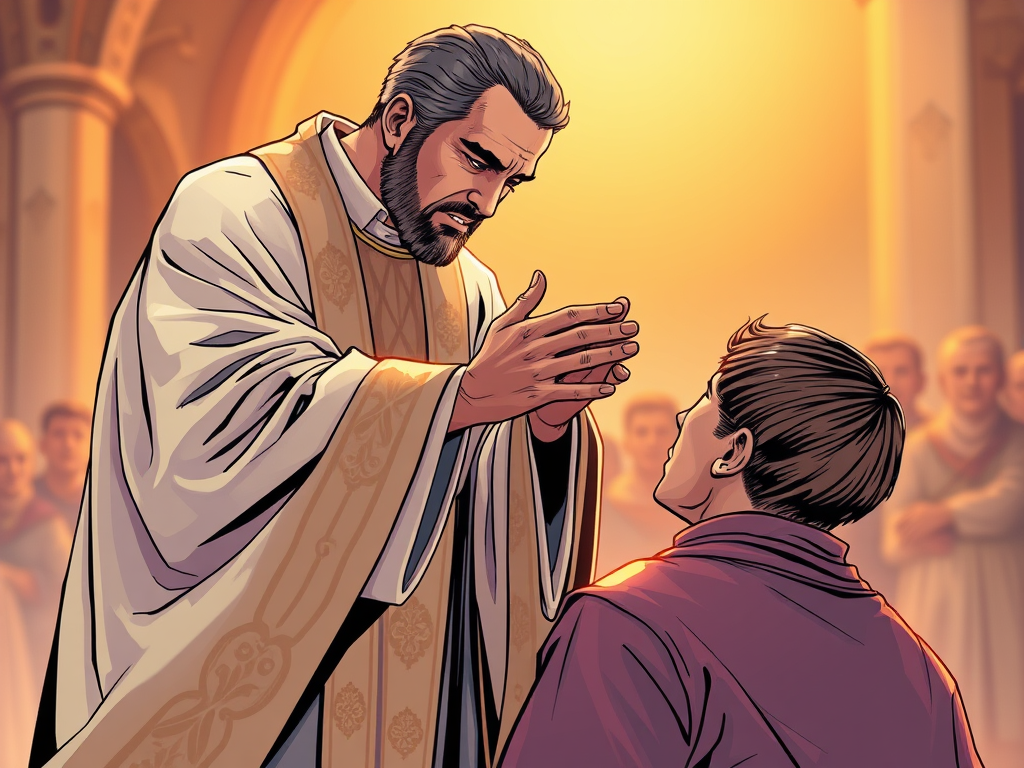
The above summary has many questions that I am not able to get into right now; however, it did touch a nerve when the author discussed the concept of repentance. But before I go into what the book brought forth, I want to tell you a story. You see, I was raised a liberal Roman Catholic, and my family was very accepting of all types of people. They even told us that if we came out as gay, they would love us without exception. But, I didn’t really grapple with repentance much. And yet, I harbored a secret. I buried it deep down and never addressed it; that is until I turned 10 and it was time to begin going to the confessional.
I was terrified. I was scared to tell the priest my sins because I knew that I had feelings that weren’t seen as appropriate. I had never been directly told this, but given I grew up in the Bible Belt in the late 90s and early 2000s, I gathered this from society. When it came my turn to go to confession, I chose to confess a smaller sin about fighting with my brother due to the very real fear that by admitting my feelings, my whole world would fall apart. I didn’t come to terms with myself until nearly ten years later.
My experience with repentance was interesting. I didn’t come face to face with it from 2005 to around 2018. I left the Catholic Church for the most part because I lost interest in my teen years, questioned my faith, and then came out in 2010. I saw hate from the Christian community and honestly wanted no part of it. But then I met my now husband. Chris never let go of his faith even though he came from a very unaffirming family. He challenged me, and religion was one of our biggest arguments. However, if he had never pushed, then I wouldn’t have continued seeking answers.
Fast forward to the last four years. I read the Bible for the first time (fully), got back into church after accepting Jesus as my Lord and Savior, went to seminary, and then became a pastor. I experienced two churches with very different ways of handling repentance, but both defined the term as a “turn or burn” concept. Well, while reading Raising Hell, I came across the author’s statement that “repent” actually meant the changing of one’s outlook or mind. What?! You mean it isn’t correlated to judgment or punishment? How is it possible that I’ve gone this long without doing a deep dive into the study on repentance in the original language? I am so disappointed in myself.
The reason this revelation has hit home for me is because I have clung to this notion that if I don’t repent daily for my sins or weaknesses, then I won’t be worthy in God’s eyes. I treat repentance as groveling before God, begging Him to make me clean from my filth. This could be for anything I find not to be pure. I would beat myself up every time I “slipped up” in some way. I would have shame and guilt that would eat me from the inside out. Yet, this new-to-me concept of repentance as a changing of one’s outlook floored me. It made me look at how I ministered to others compared to myself; would I counsel my congregation the same way I do to myself? No! I would never encourage this behavior or these thoughts. I would tell them that they are not worthless, that sin is “falling short of the mark” and not reversing one’s Salvation. It isn’t about the behavior but the WHY. What is the intention? What is the root cause? Is the action because of mental distress? Then a professional should help in this matter. Repentance is not about shaming oneself or guilt tripping; it is about changing one’s outlook on what missing the mark is! It is realizing that the cause is what should be addressed in a kind, honest, compassionate, and edifying way.
And so, I hope this post finds you and is delivered by the Holy Spirit. I want to remind you that you are saved by GRACE, which shows the character of God. The Father in heaven sent His only Son to bring salvation to all. Jesus is the person of God; He came down to save the world and not to condemn it (John 12:47). He doesn’t condemn you either. God sees you through Jesus; your mistakes are no longer visible to Him, so why do we continue to display bad fruit by tearing ourselves apart when we fall short? The changing of one’s outlook, repentance, is to see the true nature of God and work to do better every day in our connection to Him. Go easier on yourself. I’ll try to do the same.
-Be blessed,
Pastor Alex
References
Repentence meaning – Blue Letter Bible
On Our Behalf: Reclaiming Repentance As a Progressive Christian
Leave a Reply